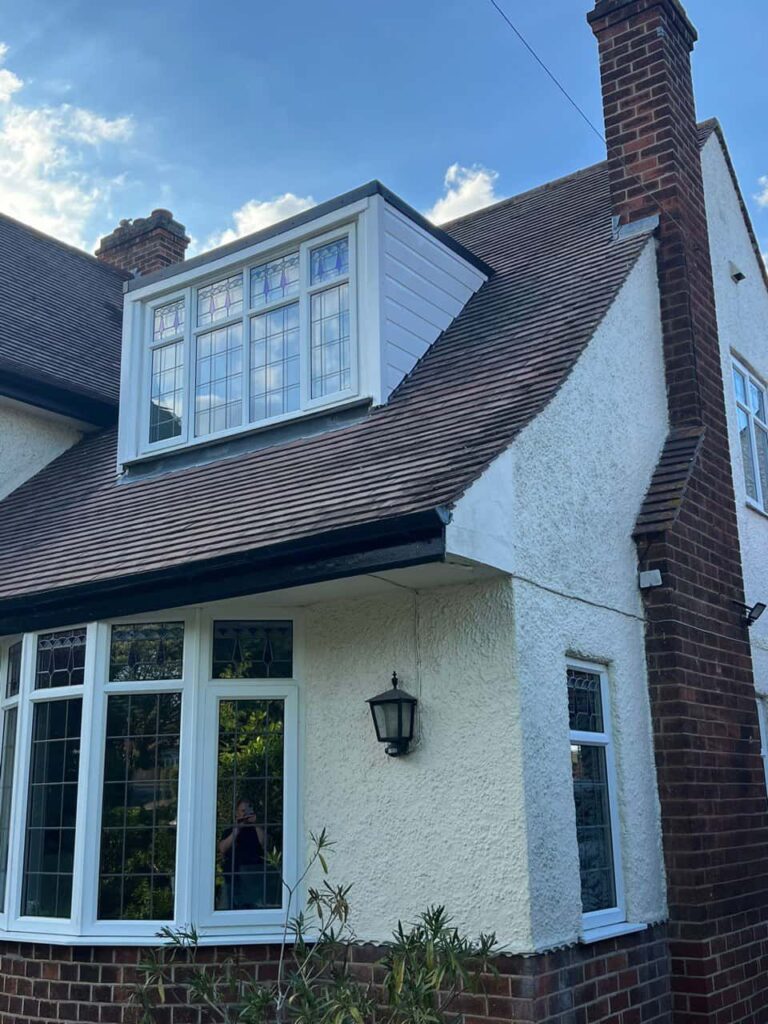
A roof can often be repaired successfully when a problem is confined to a particular area. Damaged tiles, localised flashing defects and individual leaks do not automatically mean that the entire roof needs replacing. There are situations, however, where deterioration becomes sufficiently widespread that continuing with separate repairs is no longer the most effective way to restore dependable performance.
For homeowners in Woodley, Berkshire, understanding why replacement roofs become necessary can make it easier to recognise when a roofing problem deserves a broader assessment. The decision should be based on the overall condition of the roof, how reliably its different components are performing and whether repairs can realistically provide a lasting solution.
Why Does a Roof Eventually Need Replacing?
Roofs are designed as complete systems. The covering, fixings, underlay, battens, flashing, ridges, valleys and other details work together to protect the property from the weather. As these components age, deterioration does not always occur at exactly the same rate.
Initially, individual defects may be perfectly suitable for repair. Replacement becomes more relevant when deterioration affects substantial areas, problems repeatedly return or several parts of the roofing system are becoming unreliable at the same time.
A professional roof assessment can distinguish between a roof that still has isolated repairable defects and one where a more comprehensive solution should be considered.
Widespread Deterioration of the Roof Covering
One of the most common reasons for considering roof replacement is deterioration across a significant proportion of the covering.
A small number of damaged tiles or slates can normally be dealt with individually when surrounding materials remain sound. The situation changes when defects are distributed throughout the roof.
Signs can include:
- Numerous cracked or damaged tiles
- Increasing numbers of loose roofing materials
- Significant weathering across large sections
- Repeated defects appearing in different locations
- Areas of the covering becoming increasingly unreliable
When the problem is no longer confined to one section, continually replacing individual components may not address the overall condition of the roof.
The Roof Has Developed Repeated Leaks
One isolated leak does not usually mean a replacement roof is required. The source may be a relatively straightforward local defect.
Repeated water ingress in different locations deserves closer investigation.
If one repair successfully resolves a leak but another develops elsewhere shortly afterwards, several parts of the roofing system may be deteriorating simultaneously. Over time, this pattern can indicate that the roof is becoming less dependable as a complete weatherproof barrier.
The important distinction is whether leaks originate from one unresolved defect or multiple areas of deterioration.
Repairs Are Becoming Increasingly Frequent
A roof’s repair history provides valuable information about its overall performance.
Occasional maintenance over many years is entirely different from needing repeated attention within a relatively short period. If individual repairs remain effective and the rest of the roof continues performing well, replacement may not be necessary.
However, when new problems continually appear in unrelated areas, the wider condition should be assessed.
At this stage, the question changes from “Can this defect be repaired?” to “Will another repair restore reliable overall roof performance?”
That distinction is important when making a sensible long-term decision.
Roofing Materials Have Reached an Advanced Stage of Wear
All roofing materials experience gradual weathering.
Exposure to rain, wind, temperature changes and seasonal conditions can slowly affect tiles, slates, mortar, fixings and other components. This does not mean an older roof automatically requires replacement, but advanced deterioration can eventually affect its ability to perform reliably.
The condition of the materials is more important than age alone.
A professional assessment can determine whether most of the existing covering remains serviceable or whether deterioration has become sufficiently widespread that extensive individual repairs would provide limited benefit.
Problems Extend Beyond Individual Tiles or Slates
Sometimes the visible roof covering is only one part of a broader problem.
A roof may contain serviceable-looking tiles while other important components have deteriorated. Underlay, battens, fixings and supporting details all contribute to keeping the roof secure and weather resistant.
Where significant problems exist beneath or throughout the covering, simply replacing the most visibly damaged materials may not be sufficient.
Understanding the complete roofing build-up is therefore important before deciding whether continued repair work is appropriate.
Several Roof Details Are Failing Together
Roofs contain numerous vulnerable junctions and details designed to manage water.
These can include valleys, ridges, verges, flashing and connections between different roof sections. An isolated defect in one of these areas can often be repaired successfully.
When several details are deteriorating at the same time, however, the situation deserves a wider assessment.
Multiple failing components can indicate that the roofing system has reached a stage where addressing each weakness individually is becoming less practical than considering the roof as a whole.
Previous Repairs Are No Longer Providing Lasting Results
A well-executed repair should resolve the specific problem it was intended to address.
If the same area continually fails despite previous attention, there may be a more extensive underlying issue. Similarly, repairs can become increasingly difficult to integrate effectively when the surrounding original materials are themselves heavily deteriorated.
This does not necessarily mean previous repairs were inappropriate. The condition of a roof continues to change over time.
What was once a sensible local repair may eventually become part of a much larger area requiring attention.
Significant Movement Has Affected the Roof
Changes in the shape or alignment of a roof can require careful investigation.
Visible dips, irregular roof lines or widespread displacement of roofing materials should not be treated purely as surface defects. These symptoms can indicate that the problem extends beyond individual tiles or slates.
The cause and extent of any movement need to be established before deciding on the appropriate solution.
A thorough assessment ensures attention is directed towards the actual problem rather than simply improving the appearance of the external covering.
Persistent Moisture Problems Need Proper Investigation
Recurring signs of moisture within a property can indicate that the roof is no longer consistently preventing water ingress.
Damp marks that return after rainfall, water appearing in several locations or signs that moisture has travelled beneath the covering should be investigated carefully.
Water can move away from its original entry point before becoming visible, so the internal symptom does not always reveal where the defect is located.
Where several routes of water ingress exist, a wider roofing solution may become more appropriate than treating each leak separately.
A Previous Roof Installation May Have Developed Wider Problems
Not every replacement decision is driven purely by age.
Problems can also develop where parts of an existing roof have not performed as intended. Incorrect detailing, unsuitable previous work or weaknesses across a larger installation can result in recurring problems that cannot always be solved effectively through isolated patch repairs.
Professional assessment is particularly important in these circumstances.
Identifying how the roof has been constructed and where problems originate helps determine whether sections can be corrected individually or whether a more comprehensive approach would produce a more dependable result.
When Repairs Remain the Better Option
Replacement should not be treated as the automatic solution whenever a roof develops a problem.
If damage is clearly localised, surrounding materials remain sound and the underlying roofing system continues to perform correctly, targeted repairs can often restore the roof effectively.
Examples may include an isolated damaged tile, a specific flashing defect or a small area affected by deterioration.
The objective should always be to carry out work that matches the roof’s actual condition. Serviceable roofing materials do not need to be disturbed simply because another part requires attention.
How a Professional Assessment Helps
Deciding between repair and replacement requires a wider view than simply looking at the most obvious defect.
A useful assessment should consider:
- The overall condition of the roof covering
- Whether damage is localised or widespread
- The frequency and location of previous problems
- The condition of flashing, ridges, valleys and other details
- Evidence of recurring water ingress
- The condition of surrounding roofing materials
- Whether previous repairs remain effective
- Whether further repairs are likely to provide dependable performance
This provides homeowners with a much clearer understanding of why work is needed and what level of intervention is appropriate.
Why a Replacement Roof Can Provide a More Complete Solution
When deterioration has become widespread, a replacement roof allows the roofing system to be addressed comprehensively rather than as a collection of individual defects.
The existing roof can be assessed systematically, deteriorated materials can be removed and the new roofing system can be constructed so its components work together correctly.
This can be particularly appropriate when numerous separate areas are no longer performing reliably.
The important point is that replacement should have a clear technical reason. It should follow an assessment showing that the condition of the existing roof makes continued isolated repairs a less suitable approach.
Making the Right Decision for Your Roof in Woodley
It can be difficult for homeowners to determine whether a roof requires another repair or whether its overall condition now justifies replacement.
At LS Roofing Woodley, we assess roofs in Woodley, Berkshire with the aim of identifying the cause and extent of deterioration before recommending appropriate work. A roof that remains fundamentally sound may only require targeted attention, while widespread problems can indicate that a replacement roof is the more suitable long-term solution.
The priority is to base the decision on the roof’s actual condition rather than its age or the appearance of one individual defect.
Conclusion
The most common reasons homeowners need a replacement roof include widespread deterioration, repeated leaks, increasingly frequent repairs, failing roof details and roofing materials that are no longer providing consistent protection.
However, no single defect automatically means replacement is necessary. Many roofing problems can still be repaired effectively when the surrounding roof remains sound. The deciding factor is whether deterioration is localised or has reached a stage where the roofing system as a whole is becoming unreliable.
If you are concerned about the condition of your roof in Woodley, Berkshire, contact LS Roofing Woodley. We can assess the existing roof, identify the extent of any deterioration and recommend an appropriate solution based on what the property genuinely requires.
Call us on: 0118 230 0189
Click here to find out more about LS Roofing Woodley
Click here to complete our contact form and see how we can help with your roofing needs.