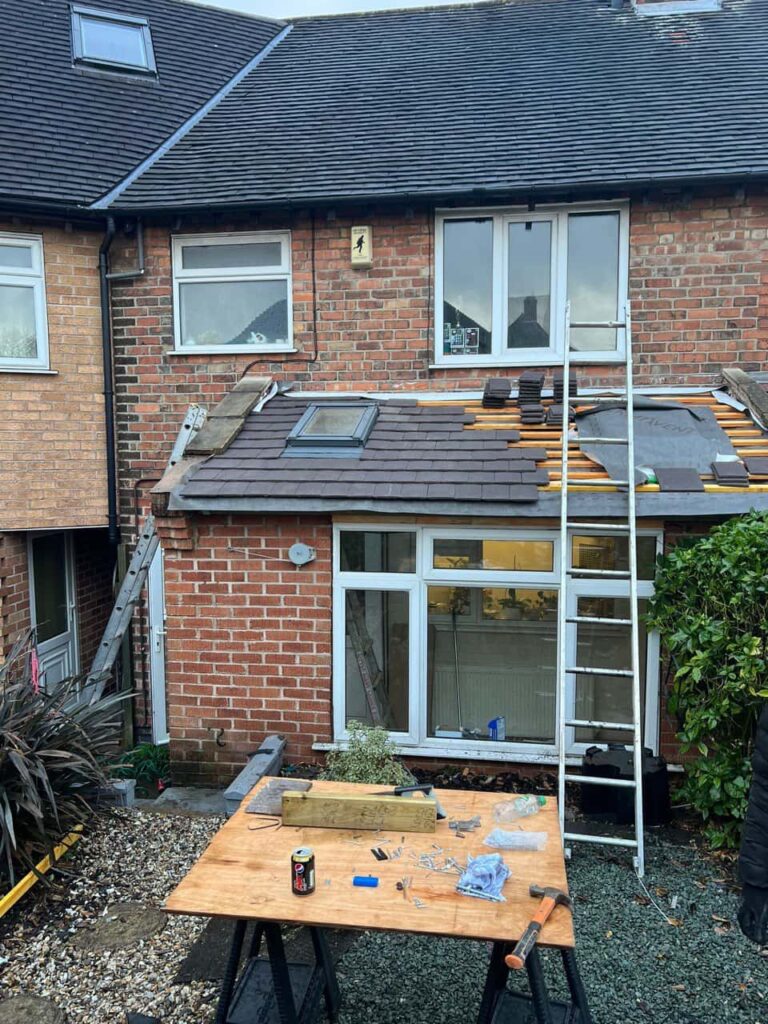
A roof leak may seem straightforward when water appears on a ceiling, but finding the exact point where moisture enters the property can be surprisingly difficult. Water does not always drip directly beneath the damaged section of the roof. It can travel along timbers, underlay or other materials before becoming visible indoors, making the source less obvious.
For homeowners in Woodley, Berkshire, identifying the cause of a roof leak is essential to ensuring the right repair is carried out. LS Roofing Woodley can inspect the roof, investigate potential entry points and help determine why water is getting inside.
What Makes Roof Leaks Difficult to Locate?
Water Can Travel Away from the Entry Point
One of the main reasons roof leaks are difficult to trace is that water can move sideways or downwards after entering the roof. It may run along rafters, pass over insulation or follow the underside of the roof covering before reaching a ceiling.
As a result, a damp patch in one room does not necessarily mean the defect is directly above it. Repairing the roof immediately above the stain without checking the surrounding area may leave the real problem unresolved.
A thorough inspection considers the route water may be taking through the roof structure, rather than relying solely on the location of the visible damage.
Small Defects Can Allow Water Inside
Not every roof leak begins with a missing tile or a large, obvious hole. A small crack in a tile, a lifted section of flashing or a gap around a roof junction can be enough to let rainwater enter.
These defects may be difficult to spot from ground level, particularly when they are concealed by overlapping materials or located on less visible roof sections.
Even minor damage should be investigated if it is allowing water into the property. Finding and repairing the entry point early can help prevent moisture from affecting insulation, timber and internal finishes.
Flashing and Roof Junctions Can Be Vulnerable
Areas where the roof meets a chimney, wall, skylight or extension often require additional sealing. Flashing protects these junctions, but it can deteriorate, become loose or develop gaps over time.
A leak near a chimney breast or upper wall may therefore originate from a roof junction rather than the main roof covering. The defect may also be hidden behind adjoining materials, making it harder to identify without a closer inspection.
Checking these vulnerable points is an important part of tracing persistent roof leaks.
The Leak Only Appears in Certain Weather Conditions
Some roof leaks occur only during heavy rain, strong winds or particular wind directions. Wind-driven rain can enter through gaps that remain unaffected during lighter showers.
A leak may also appear intermittently if water collects in one area before finding a route into the property. This can make it difficult to reproduce the problem during a dry inspection.
Noting when the leak occurs can help narrow down the possible causes. For example, whether the problem follows prolonged rainfall or appears only during windy conditions may provide useful clues for the roofer.
Gutters and Drainage Problems Can Be Mistaken for Roof Defects
Water entering around the roofline is not always caused by damaged tiles. Blocked gutters, leaking joints, loose gutter brackets or overflowing downpipes can allow water to reach areas where it should not collect.
If dampness appears around the eaves or on an external wall, the drainage system should be checked alongside the roof covering. Otherwise, repairs may focus on the wrong component.
Identifying whether the water originates from the roof itself or from a drainage fault is essential to resolving the problem properly.
Condensation Can Resemble a Roof Leak
Dampness in a loft or around ceiling areas does not always mean rainwater is entering through the roof. Poor ventilation can allow condensation to form when warm, moist air meets cold surfaces.
Condensation may leave moisture on roof timbers or insulation and can sometimes be confused with a leak. The timing, distribution and appearance of the dampness can help distinguish between the two, although further inspection may be needed.
Correctly identifying the source matters because repairing tiles or flashing will not resolve moisture caused by inadequate ventilation.
How Can a Roofer Trace a Difficult Leak?
Inspecting the Roof and Its Vulnerable Areas
A professional inspection looks for damaged or displaced tiles, deteriorated flashing, gaps around roof junctions and problems with gutters or valleys. The roofer may also examine the loft, where accessible, for water staining, damp insulation or marks on the roof timbers.
These checks help build a clearer picture of where water could be entering and how it may be travelling through the structure.
Considering Previous Repairs
If a leak has returned after earlier work, the original repair may not have addressed the underlying cause. There may be another entry point nearby, or water may be travelling from a different part of the roof.
Reviewing the affected area and any previous repair work can help determine why the problem persists and what needs to be done differently.
Addressing the Cause Rather Than the Visible Stain
The most effective roof leak repair deals with the source of the water, not simply the damage visible indoors. Depending on the findings, this may involve replacing damaged tiles, repairing flashing, resolving drainage problems or investigating defects beneath the roof covering.
LS Roofing Woodley can help identify the likely cause and recommend appropriate repairs based on the condition of the roof.
When Should You Arrange a Roof Inspection?
Do not ignore recurring damp patches, water stains, peeling paint or a musty smell near ceilings and loft spaces. These signs may indicate ongoing moisture, even if water is not actively dripping.
If you notice water entering during rainfall, arrange an inspection promptly. Avoid climbing onto the roof yourself, as wet surfaces and damaged materials can be dangerous.
Conclusion
Roof leaks can be difficult to trace because water may travel away from the original entry point, small defects can remain hidden, and problems with flashing, gutters or condensation can produce similar symptoms. A careful inspection helps distinguish between these causes and ensures that repairs address the actual problem.
If you are struggling to locate a roof leak at your property in Woodley, Berkshire, contact LS Roofing Woodley. The team can assess the affected areas and help you determine the most suitable next step to protect your home from further water damage.
Call us on: 0118 230 0189
Click here to find out more about LS Roofing Woodley
Click here to complete our contact form and see how we can help with your roofing needs.